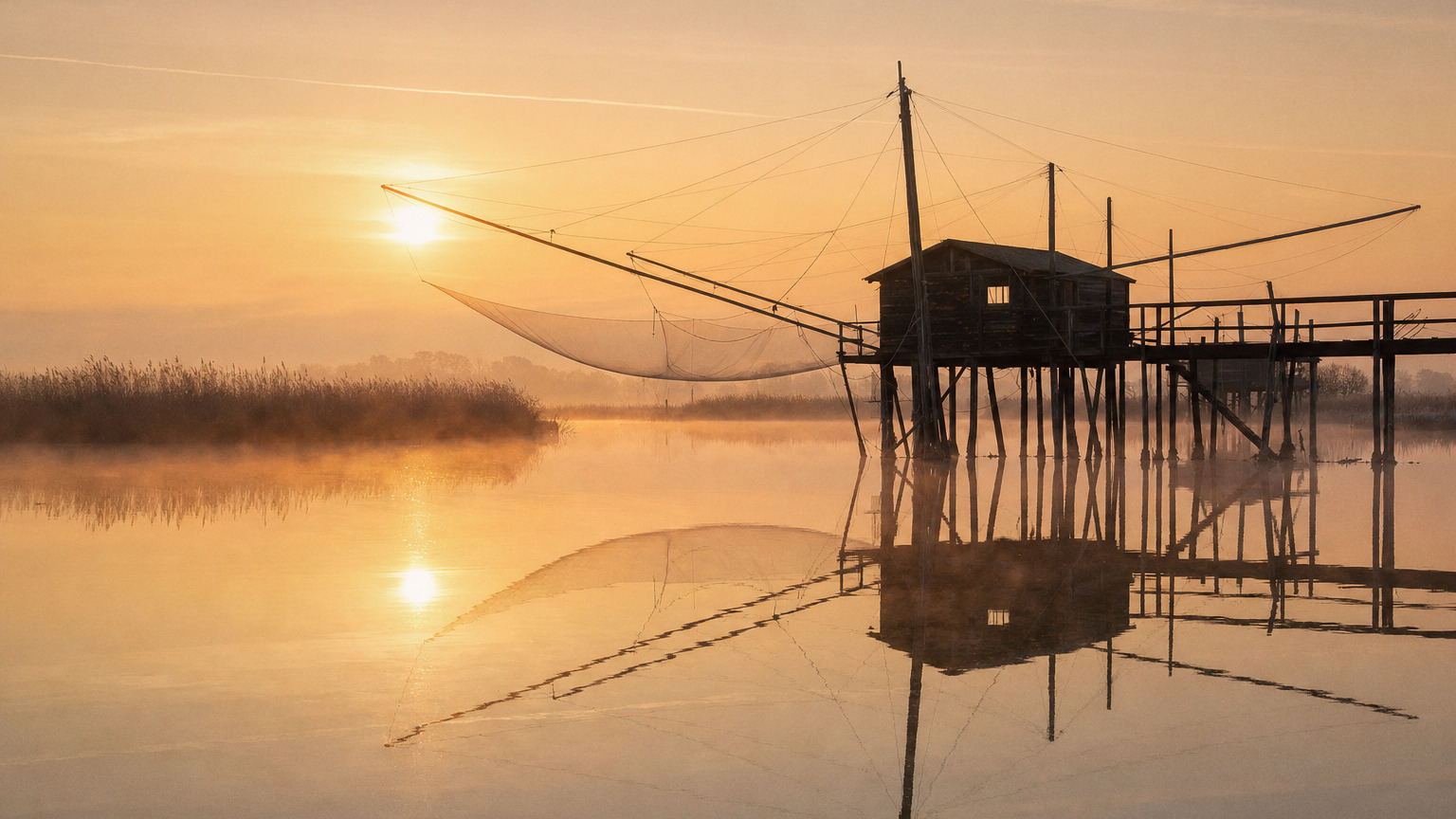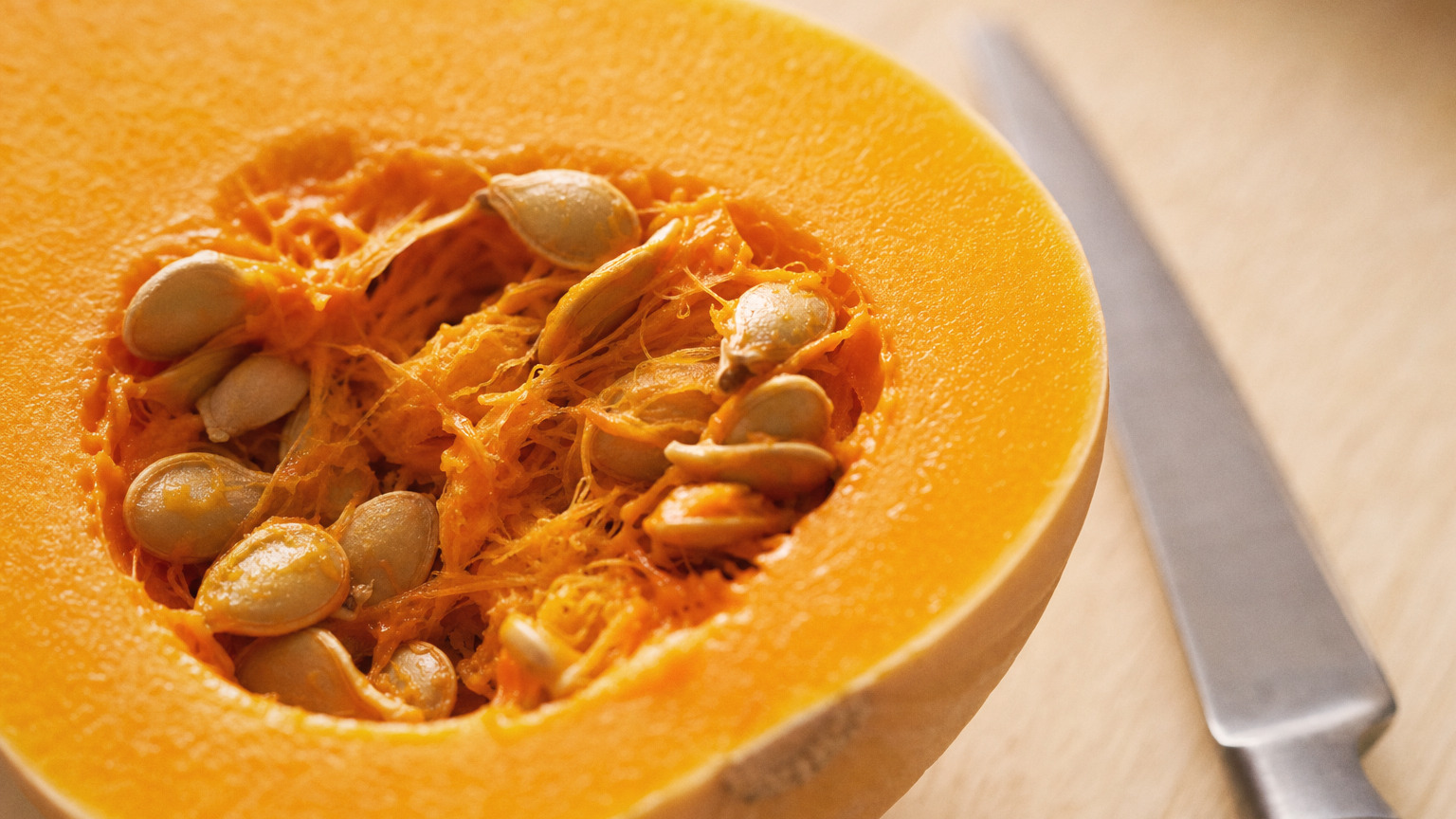
If you're wondering what to eat in Ferrara, know this: it's a city with two cuisines in one. On one side the Este court, the splendour of the Renaissance banquet, the pumpkin and pork of the hinterland. On the other, the water: the lagoons, the Po Delta, eel and oily fish. We at Le Nuvole are on the side of the water, we're a fish trattoria, but in Ferrara land and water have always gone hand in hand, and you can't understand one without the other.
So, what to eat in Ferrara? Here is our stroll: eight dishes that tell the city's story, from the dukes' table down to where the sea ends. For each one: where it comes from, what it is, and how we like it.
From the Este court
Ferrara's cuisine was born in the Renaissance, when at the Este court the banquet was an art form. The “scalco”, the man who organised the banquet, counted for more than the cook. Two names come up in any honest account of this cooking: Cristoforo da Messisbugo, whose recipe book came out in 1549, and Giovan Battista Rossetti, with his Dello Scalco of 1584. Almost all the dishes that follow start there.
1. Cappellacci di zucca ferraresi
The origin. Pumpkin-filled pasta, PGI since 2016 (IGP in Italian), and Ferrara's egg pasta was already documented by Messisbugo in 1549. Pumpkin has been grown in these fields since 1570.
What they are. Fresh egg pasta filled with oven-baked yellow “violina” pumpkin, cheese, breadcrumbs and a pinch of nutmeg. The shape recalls the farmer's straw hat, caplaz in dialect. Something we always say: Ferrara's cappellacci do not contain amaretti biscuits, they are not the tortelli of Mantua.
How we like them. The classic: melted butter and sage, which lets the pumpkin do the talking. And in the glass, a mature, savoury white from the coast, a Bosco Eliceo: the salinity of the sea against a dish of the land. There, in the very first dish, land and water already talking to each other.
2. Salama da sugo
The origin. A PGI cured pork sausage with Renaissance roots: the first mention dates from 1492, and there's a letter from Lorenzo de' Medici to Duke Ercole I d'Este thanking him for the “precious and most welcome” gift.
What it is. Pork with red wine and spices (nutmeg, cinnamon, cloves), stuffed into a pig's bladder, tied “like a melon” and aged for up to a year. It's steamed, suspended over boiling water, for around five hours. Pure patience.
How we like it. Hot, sliced, with mashed potato. Alongside, a sparkling Fortana from the Bosco Eliceo: acidity and bubbles cut through the fat and bring balance. It's the most “courtly” dish on the list: substantial, rich, for a special occasion.
3. Pasticcio di maccheroni alla ferrarese
The origin. Careful here: it is not PGI. It's the subject of a De.Co. project, a Denominazione Comunale d'Origine, the City of Ferrara's own municipal designation of origin. It descends from the meat “pastelli” of the Middle Ages and the Renaissance, and the macaroni arrived from the South with the marriage in 1473 between Ercole d'Este and Eleonora d'Aragona, daughter of the King of Naples.
What it is. A shell of sweet shortcrust pastry filled with macaroni, ragù, béchamel and truffle, dome-shaped and baked in the oven. The beauty is in the contrast: sweet outside, savoury inside. Traditionally it's a Carnival dish.
How we like it. As a small baroque marvel to be cut open at the table. If you're thinking of the “timballo” in The Leopard, you're not far off: the same idea of pasta hidden under a crust.
4. Coppia ferrarese
The origin. The city's PGI bread. Messisbugo mentions it in 1547 as “pane intorto”, twisted bread, in the household accounts for the table of Prince Alfonso II. That twisted bread is today's Coppia.
What it is. Two twisted arms forming a “fan of four horns”; the tips are called crostini. A crust as dry and crunchy as a breadstick, a soft heart. (There's also a legend linking it to Lucrezia Borgia's curls: charming, but it's legend, not history.)
How we like it. As trattoria bread, plain and simple. Those crunchy crostini are made to be snapped off and used to mop up a sauce, or to keep a glass company while you wait for the first course.
And then the sea ends
Here we head down towards the water, and this is home. The Valli di Comacchio lie in the Po Delta Park, between the Po, the Reno and the Adriatic: reed beds, brackish lagoons, the only delta in Italy, a UNESCO World Heritage Site together with Ferrara. People have always fished and farmed there: eel, sea bass, lagoon shrimp.
5. Anguilla marinata di Comacchio
The origin. This one too is not PGI: it's a Presidio Slow Food, a Slow Food Presidium. The marinating method was codified as far back as the Regulations of 1818, and it's still made at the Manifattura dei Marinati in Comacchio, in the “Sala dei Fuochi”, the Hall of Fires, with its twelve great hearths.
What it is. Wild lagoon eel, spit-roasted and put in brine: for every litre of white wine vinegar, around 70 grams of Cervia salt, a glass of water, a bay leaf. The eel is born in the Sargasso Sea and comes back here to close the circle; it's caught with the lavorieri, the traditional fishing weirs, from October to December. They say that in Comacchio there are forty-eight recipes for eel.
How we like it. It's the flagship dish of the lagoons, the one closest to us in spirit. Vinegar, salt, woodsmoke: austere and beautiful. Against the vinegar of the marinade we happily go for a Bosco Eliceo Sauvignon, dry and slightly tart, which balances the richness of the eel.
6. Brodetto di valle
The origin. The Adriatic fish soup was born on board the fishing boats, as a way of using up the less prized catch. On the Ferrara side the reference point is the lagoon version: Comacchio's eel brodetto “a becco d'asino”.
What it is. Eel with onion, vinegar and tomato conserve; in winter there's also a version with savoy cabbage. Poor man's cooking, of leftovers and patience.
How we like it. Deep, slow, made for mopping up with bread. It's the dish that best tells the story of life in the lagoons: nothing precious in the ingredients, everything in the time and the hand. Here, with the sharp dishes of the Comacchio area, a still Fortana from the Bosco Eliceo holds up better than the whites. (And a brodetto di valle is not a “DOP Ferrara dish”; none of them is: it's tradition, and that's perfectly fine.)
7. Pesce azzurro: sardoncini and alici
The origin. Sardines and anchovies from the Adriatic, the pesce azzurro, the oily fish, of the Ferrara and Romagna coast. At the Lidi di Comacchio they're fried and then marinated with vinegar and bay leaf, the same “old-style” logic as the eel.
What it is. Humble fish, plentiful, sustainable. Fried and marinated, or scottadito, straight off the grill.
How we like it. A lot. It's the heart of an honest seaside trattoria: no trophies, just freshness. Warm sardoncini, a rustic farmhouse fizz from the Bosco Eliceo, and you feel good, with no hurry.
8. Pampapato di Ferrara
The origin. The city's PGI cake, since 2015. It was born in the sixteenth century in the enclosed convent of Corpus Domini: the nuns prepared a spiced bread for the high prelates at Christmas. The shape recalls a cardinal's cap, the “pope's bread”. The chocolate coating, on the other hand, is a recent idea: a Ferrara pastry chef, in 1902.
What it is. A dome of almonds, candied fruit, cocoa, nutmeg and cinnamon, covered in dark chocolate. One of the rare cakes with no added fat.
How we like it. At the end of the meal, in small pieces, unhurriedly. It closes the circle: we started with the Este banquet, and we finish with a sweet born next door to their court.
(A note, because it matters to the people who cook: torta tenerina, Ferrara's other great cake, is not PGI; it's a Prodotto Agroalimentare Tradizionale, a PAT, a traditional agri-food product. Delicious all the same.)
Frequently asked questions
What is the typical dish of Ferrara?
There isn't just one: the city lives on a pair. If we have to choose the symbol of the land's table, it's cappellacci di zucca; for the water's, Comacchio eel. Together they tell Ferrara's story better than any single dish.
Are cappellacci di zucca PGI?
Yes, they have been PGI since 2016. But be careful not to call everything else PGI: pasticcio di maccheroni is a municipal De.Co. project, the tenerina is a PAT, Comacchio eel is a Presidio Slow Food. They're different recognitions, and mixing them up is the most common mistake.
Where do you eat fish in Ferrara?
The thread to follow is that of the lagoons: eel, brodetto di valle, oily fish from the Adriatic, and the small Goro oysters from our Delta. Look for places that think in terms of season and place rather than big names. And yes, at our place too: that's exactly what we try to bring to the table.
If you're passing this way
Eight dishes aren't the whole of Ferrara; this is a stroll, not a census. But if you line them up, from the Este court down to where the water turns brackish, you've understood what this city is made of: double, between splendour and lagoon, between pumpkin and eel.
We're on the side of the sea and the lagoons, with the wines of the sands in the cellar. If you fancy trying this side of Ferrara, the table is ready. And if you end up in Comacchio in front of a plate of eel that isn't ours, that's perfectly fine too: it's the same story, and it's a good one.