Blog

  • Christmas in Ferrara 2026: markets, concerts, pampapato and New Year’s Eve at the Castello

    Christmas in Ferrara 2026: markets, concerts, pampapato and New Year’s Eve at the Castello

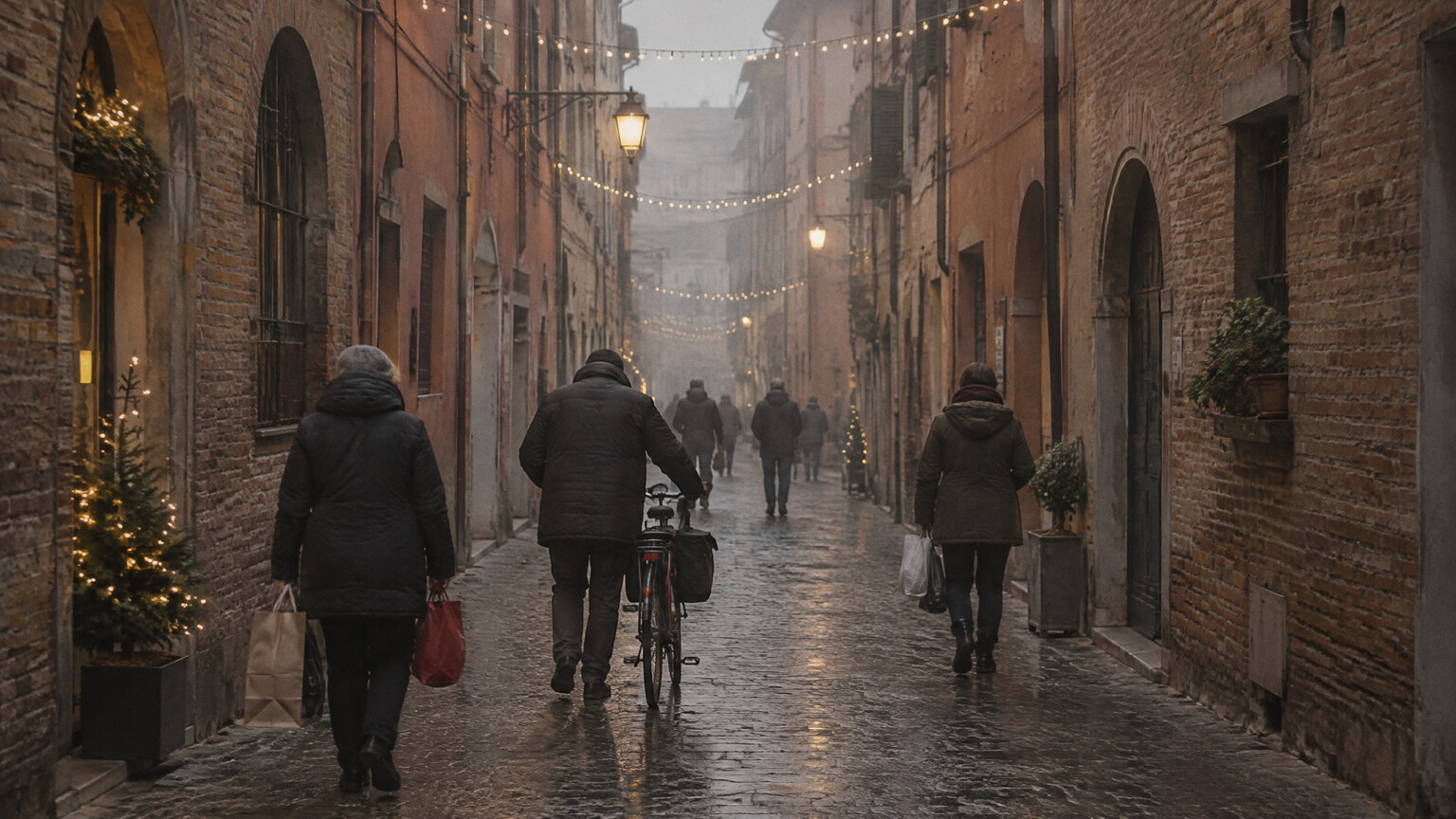
    A December evening, in the centre of town. Lights strung between the houses, the fog swallowing the end of the street. Someone pushing a bike, shopping bags hanging from the handlebars. The smell of chocolate and chestnuts.

    Christmas in Ferrara is like that: it doesn't make a fuss, it lights up slowly. This year it runs from 21 November 2026 to 6 January 2027, with the markets in piazza Trento e Trieste, a Christmas concert at the Teatro Comunale, two exhibitions open throughout the holidays, pampapato in every shop window and, at midnight on the 31st, the Incendio del Castello. Here's how we live it, and what we recommend.

    The Christmas markets in piazza Trento e Trieste

    From Saturday 21 November 2026 to Wednesday 6 January 2027 piazza Trento e Trieste, beneath the Duomo, becomes one big Christmas market. There are two kinds of stalls, side by side:

    1. CNA Christmas Village, on the Palazzo San Crispino side: the artisans, every day from 10 to 19.30. Handmade things for the home, ceramics, accessories, and a section for the sweet-toothed and the hungry, with pampepato and the traditional marinated fish of Comacchio.
    2. Festa del Regalo by Confesercenti, on the side facing the Cathedral square: from 10 to 19, gift ideas, festive sweets, decorations for the tree and the nativity scene.

    Our tip: go early in the morning, on a weekday. On Saturday afternoons the square is packed, and the beauty of Ferrara is walking without having to push.

    Pampapato, the taste of Christmas in Ferrara

    If there's one flavour that means Christmas in Ferrara, it's pampapato (or pampepato), the city's spiced chocolate Christmas cake. It has been IGP since 2015: a dark dome covered in dark chocolate, filled with toasted almonds, candied fruit, cocoa, cinnamon and nutmeg. No butter, no oil: it's one of the few cakes with no added fat.

    Its history is lovely. It goes back to the 16th century, to the enclosed convent of Corpus Domini, where the nuns made a spiced bread to give to high-ranking clergy for the holidays. Its shape recalls a cardinal's skullcap, hence the name, "the Pope's bread". The chocolate on top only arrived in 1902, thanks to an idea from a Ferrarese pastry chef.

    You buy it in the bakeries and pastry shops in the centre, and you give it as a gift. For the rest of the Ferrarese table, from cappellacci di zucca to salama da sugo, we'll leave you our guide to what to eat in Ferrara.

    An evening of music: the Christmas Concert at the Comunale

    On Thursday 17 December, at 20.30, the Teatro Comunale hosts the Christmas Concert of its concert season. On stage: Jordi Savall with Hespèrion XXI, the soloists of La Capella Reial de Catalunya and the Tembembe Ensemble Continuo, in a programme of villancicos, the traditional Christmas songs of Spain and Latin America.

    The theatre is beautiful, and in December even more so. If you're interested, check for tickets on the theatre's website in good time.

    Museums and exhibitions open over the holidays

    The holidays are when you finally have time for a museum. This year there are two not to miss:

    1. "Da Monet a Van Gogh a Kandinsky" at Palazzo dei Diamanti, open until 10 January 2027. We wrote here about what to see and how to plan your visit.
    2. "Vanitas. Fiori e simboli, da Hayez a Casorati" at the Galleria BPER, corso della Giovecca 108, until 31 January 2027.

    And then there's the Castello Estense, which stays open for almost all of the holidays: from 10 to 18, closed on Tuesdays and on 25 December. On public holidays museum opening times can change, so it's always worth a quick look at the official websites before you head out.

    Christmas Eve, fish and eel

    In many Italian homes, Christmas Eve dinner is meatless, which means fish. Around here, between Ferrara and the Delta, there's often eel on the Christmas Eve table too, and the traditional marinated eel of the Valli di Comacchio is a Presidio Slow Food.

    For us, as a fish trattoria, it's the best time of the year. Paolo follows what the sea and the lagoons bring, and the off-menu specials are described in person, table by table. With a plate of fish from the Delta, a local wine sits well in the glass: we've written about the wines of the sands of Bosco Eliceo.

    You'll find the evenings we're open over the holidays on the reservations page. If you have any questions, message us on WhatsApp at 347 259 1995.

    A gift from Ferrara

    If you're looking for a gift that tastes of this place, we have two ideas. The first is a pampapato, chosen in a bakery in the centre. The second is ours: a Le Nuvole gift card, in other words a dinner to give.

    It's valid for food and wine, even across several visits, for twelve months. You can receive it as a PDF by email, collect it printed in an envelope at the trattoria, or have it sent straight to the person receiving it, even on the day and at the time you choose. Handy, on the evening of the 24th, for anyone who's left it to the last minute (it happens, it happens to everyone).

    New Year's Eve in Ferrara: the Incendio del Castello

    Christmas in Ferrara ends with a bang, literally. On the night of 31 December, as the clock strikes midnight, piazza Castello hosts the Incendio del Castello Estense: a show of fireworks and music that "sets fire" to the towers and the moat. It has been held for over twenty years and is confirmed for this New Year's Eve too.

    The party in the square is free and draws huge crowds. Our tip: come on foot or by bike, a little early, and pick your spot along the moat before eleven. If you'd rather stay in the warm, there's also a gala dinner in the rooms of the Ridotto of the Teatro Comunale, with tickets.

    Frequently asked questions

    When are the Christmas markets in Ferrara in 2026?
    From 21 November 2026 to 6 January 2027, in piazza Trento e Trieste: the CNA Christmas Village every day from 10 to 19.30, the Festa del Regalo from 10 to 19.

    What time is the Incendio del Castello on New Year's Eve?
    At midnight on 31 December, in piazza Castello. The party in the square is free.

    What is Ferrara's pampapato?
    It's the city's Christmas cake, IGP since 2015: a dome of spiced dough with almonds and candied fruit, covered in dark chocolate. It was born in the 16th century in the convent of Corpus Domini.

    Is the Castello Estense open at Christmas?
    It's closed on 25 December and, as always, on Tuesdays. On other days it opens from 10 to 18.

    If you're passing by

    Christmas in Ferrara doesn't need grand effects. A square full of stalls, a concert, a slice of pampapato, and a long evening at the table, with fog outside and warmth inside.

    If you'd like to spend it with us, the table is ready. And if you already know us, you know the best thing is when you come back.
  • What we like this month: November in Ferrara

    What we like this month: November in Ferrara

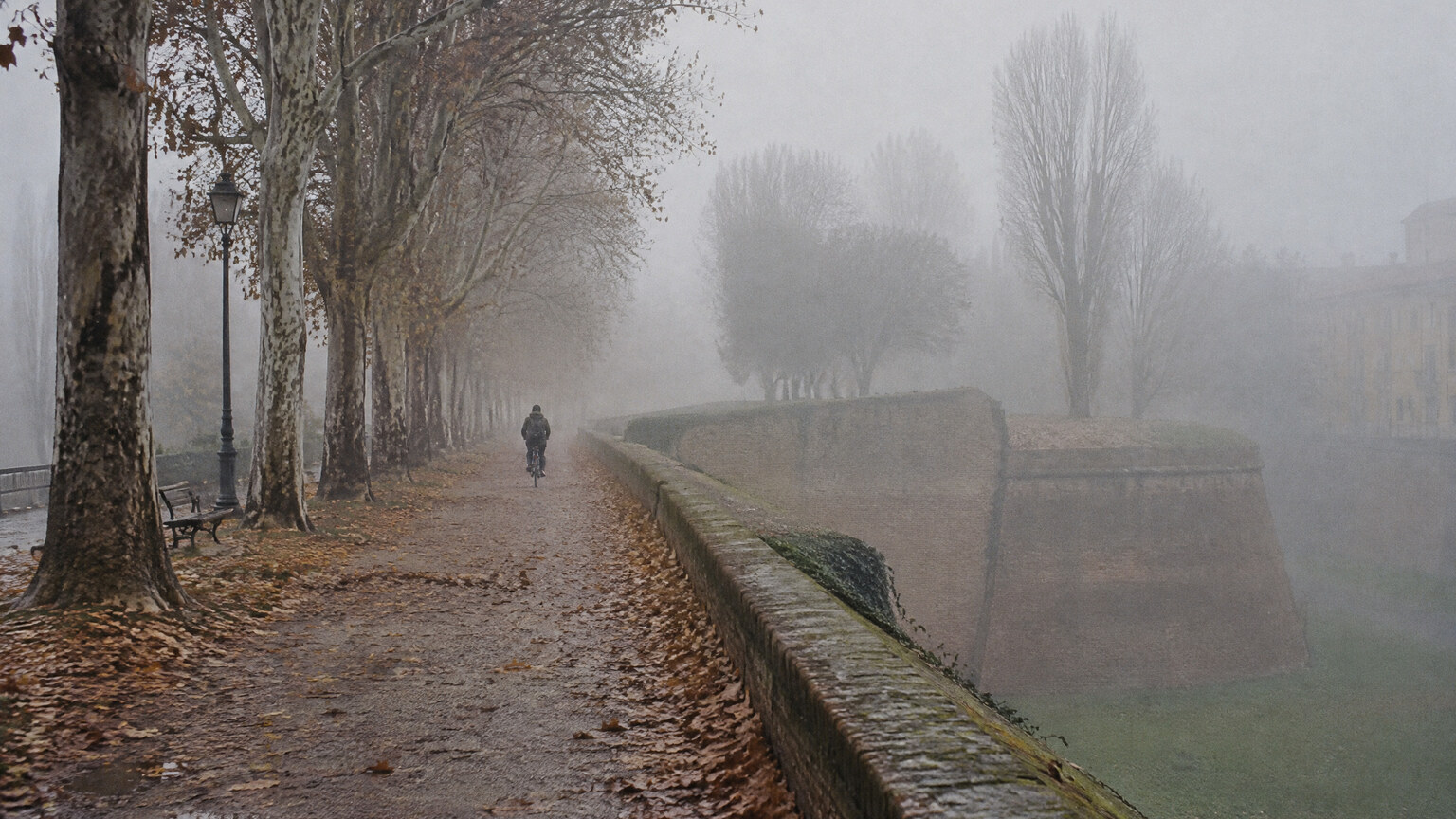
    The fog that rolls in at night and still hasn't lifted by morning. The city walls disappearing after twenty metres. Bicycles appearing out of nowhere, their lights on.

    That's November in Ferrara, and we love it. It's the month when the city draws in a little, and everyone looks for somewhere warm to be. But there's no shortage of November events in Ferrara: a weekend of wine glasses in the square, two great exhibitions open at the same time, the lagoons in full season and, as the month draws to a close, the first Christmas lights. Here's what we like.

    A toast in the square: Calici d'Autunno

    From 13 to 15 November 2026 Calici d'Autunno is back, and this year it has a new home: it moves to piazza Municipio. Three evenings of wines, tastings, music and DJ sets, right in the heart of the city.

    For us, who choose our wine bottle by bottle, it's always lovely to see a square full of people tasting, asking questions, comparing. A tip: take it slowly, one glass at a time, and ask who is behind the bottle. That's often the most interesting part.

    Two exhibitions, one weekend

    November is the right month for museums: it's cold outside, and inside there's all the time you need. And this year Ferrara has two that are worth the trip.

    1. "Vanitas. Fiori e simboli, da Hayez a Casorati", at the Galleria BPER in Palazzo Barbantini-Koch, corso della Giovecca 108. More than 40 works from the 19th and early 20th centuries in which flowers speak of beauty and how briefly it lasts: Hayez, Segantini, Previati, Casorati and others. Open until 31 January 2027, on Thursdays from 14 to 19, and Friday to Sunday from 10 to 19. Full ticket 10 euros, free up to age 26.
    2. "Da Monet a Van Gogh a Kandinsky" at Palazzo dei Diamanti, open until 10 January 2027. We wrote here about what to see and how to plan your visit.

    The two exhibitions meet at one point: Segantini and Previati are in both. Seeing them just a short walk apart, in two different palazzi, is a small treat we recommend you give yourself.

    The lagoons in full season

    While the city wraps itself in fog, in the Valli di Comacchio eel season is at its peak. The fishing runs from October to December, with the lavorieri, the old grid-like weirs of the lagoons. The traditional marinated eel of the Valli di Comacchio is a Presidio Slow Food.

    A trip to the lagoons on a grey November morning has a beauty all its own: still water, reeds, silence. Then you head back into town, and in the evening you eat.

    On the plate and in the glass

    When it turns cold, Ferrara makes you crave food that warms you up. We're a fish trattoria, but we can't leave out salama da sugo IGP, Ferrara's slow-cooked pork sausage, which in this city is almost a religion: steamed for hours and served hot, with mashed potatoes. If you've never tried it, November is the month. We talk about it more here: what to eat in Ferrara.

    At our place, Paolo follows what the sea and the lagoons bring, and the off-menu specials are described in person, table by table.

    In the glass, 11 November is San Martino, St Martin's Day, and there's an old saying: "per San Martino ogni mosto diventa vino", by St Martin's Day every must becomes wine. We take it literally, with a bottle from winemakers we know. And with eel, the local answer is still the Fortana frizzante from Bosco Eliceo: bubbles and acidity to cut through the richness.

    At the end of the month, the first Christmas lights

    From Saturday 21 November the CNA Christmas Village opens in piazza Trento e Trieste, with Christmas stalls that will stay until 6 January 2027, every day from 10 to 19.30. It's the sign that the holidays are near. For everything else, see you in December.

    Frequently asked questions

    When is Calici d'Autunno in Ferrara in 2026?
    On 13, 14 and 15 November 2026, in piazza Municipio, with wines, tastings, music and DJ sets.

    When do the Christmas markets open in Ferrara?
    The CNA Christmas Village in piazza Trento e Trieste opens on Saturday 21 November 2026 and stays until 6 January 2027, every day from 10 to 19.30.

    Where can you see the Vanitas exhibition, and until when?
    At the Galleria BPER, in Palazzo Barbantini-Koch (corso della Giovecca 108), until 31 January 2027. A full ticket costs 10 euros, and entry is free up to age 26.

    If you're passing by

    November is the month of long dinners, with fog outside and warmth inside. Whether you come for the wine, for the exhibitions or for an unhurried evening, the table is ready.

    We look forward to seeing you. And if you already know us, you know the best thing is when you come back.
  • Internazionale a Ferrara: what the journalism festival is and how to enjoy it (2-4 October 2026)

    Internazionale a Ferrara: what the journalism festival is and how to enjoy it (2-4 October 2026)

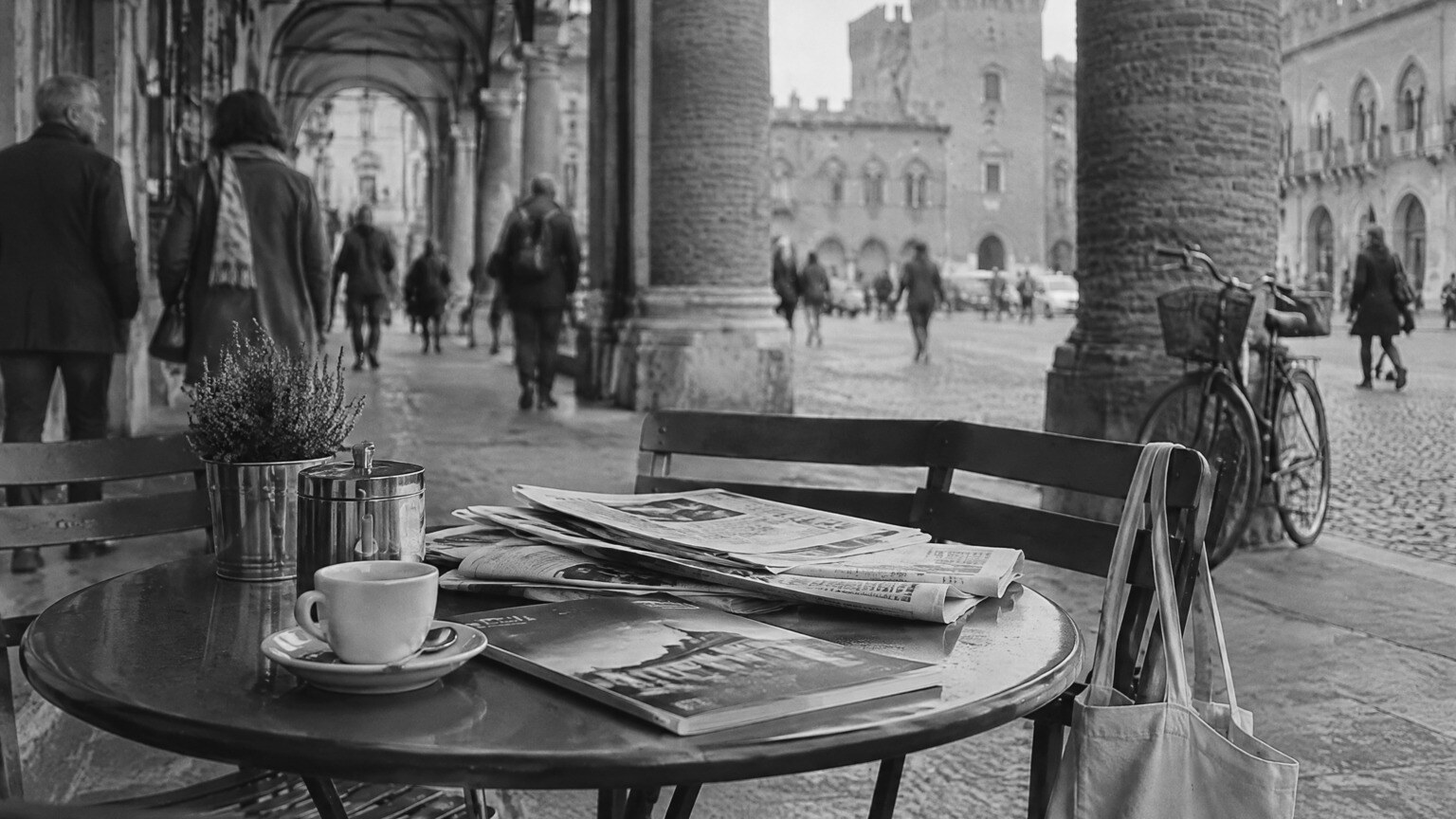
    A Friday in October, piazza Trento e Trieste. People queuing with a newspaper under their arm, different languages at the café tables, bicycles everywhere. For three days the city speaks with a different voice.

    If you are wondering what Internazionale a Ferrara is, the short answer is this: a free journalism festival that brings to town the people whose job is telling the story of the world. This year it runs from 2 to 4 October 2026 and it is the twentieth edition. We look forward to it every year, and here is why.

    First of all: what is Internazionale

    Internazionale is an Italian weekly magazine founded in 1993. It does something simple and rare: it picks articles from newspapers all over the world and translates them into Italian. It hits the newsstands on Fridays.

    Since 2007, once a year, the magazine steps off the page and comes to Ferrara. The festival is organised by the Internazionale editorial team together with the Comune di Ferrara (the city council), Arci Ferrara and the Associazione IF. Its symbol is a small planet with human features, drawn by Anna Keen: this year, for the twentieth anniversary, it is playing a drum, like a town crier arriving with urgent news.

    What happens over those three days

    Talks, debates, book launches, screenings, exhibitions, workshops. More than two hundred guests, among them journalists, writers, photographers and activists, from more than thirty countries. The 2026 themes are the ones we read about every morning: wars, artificial intelligence, the climate crisis, rights, migration, new inequalities.

    A few names from this year, to give you an idea:

    • historian Omer Bartov and Palestinian writer Mohammed El Kurd, with two different perspectives on the Israeli-Palestinian conflict;
    • Pankaj Mishra and Adam Shatz on the world after 7 October;
    • lawyer Philippe Sands on impunity, starting from the Pinochet case;
    • reporter Jon Lee Anderson on Cuba and the future of Havana;
    • Nicola Lagioia, presenting a preview of his new novel, Santa Barbara, together with Donatella Di Pietrantonio;
    • Zerocalcare, in two talks: with philosopher Lea Ypi and with Canadian writer Simon Paré-Poupart.

    Over the years Angela Davis, Marjane Satrapi, Noam Chomsky and Arundhati Roy have all come through here. It is a festival that takes itself seriously without taking itself too seriously: this year there is also a stand-up comedy show built on testimonies from Medici Senza Frontiere (Doctors Without Borders), and on Saturday night a party for the twentieth anniversary at the Circolo Arci Bolognesi.

    Not just talks

    The festival has its own series, and they are worth knowing about:

    1. Mondovisioni: documentaries on current affairs, rights and information. It is the only part you pay for (5 euros).
    2. Mondoascolti: a series of audio documentaries.
    3. Internazionale Kids: events for children, curated by the Internazionale Kids editorial team.
    4. Fuoriclasse: the programme designed for secondary school students.
    5. Workshops: on journalism, writing, comics and more, with registration.

    How to take part: free, but with a ticket

    The talks are all free and there is no need to book. There is, however, one detail worth knowing before you arrive.

    For the talks at the Teatro Comunale, the Cinema Apollo, the ex Teatro Verdi and Apollo 3 you need a tagliando, a free ticket, to be picked up at the festival stand in piazza Trento e Trieste. The stand is open on Friday and Saturday from 8 to 18, and on Sunday from 8 to 15. All other talks are free entry, until seats run out.

    Our advice: the full programme is online on the festival website. Pick two or three talks a day, no more, and stop by the stand early in the morning for your tickets. The city does the rest: the venues are free of architectural barriers and you can reach them on foot or by bike. For information there is also a phone number, 0532 241419.

    Why we like it

    Because for three days Ferrara is full of curious people. People argue under the porticoes, queue to hear someone who has come from the other side of the world, and walk out of a theatre with a new question in their pocket. And we like curious people very much, at the table too.

    In the evening, after a day like that, you want to talk it over calmly. A plate of fish, a bottle from winemakers we know, the story of what you heard. A practical tip from those of us who live through it: on those days the city fills up, and so do the tables. If you would like to have dinner with us, think about it in good time.

    If you are staying a few more days, October has plenty more: we have told you about what we like this month and the exhibition at Palazzo dei Diamanti, from Monet to Kandinsky, open until January.

    Frequently asked questions

    When is Internazionale a Ferrara in 2026?
    From 2 to 4 October 2026. It is the twentieth edition of the festival, which began in 2007.

    Do you have to pay for the talks?
    No, they are all free and there is no need to book. For those at the Teatro Comunale, the Cinema Apollo, the ex Teatro Verdi and Apollo 3 you need a free tagliando (ticket), to be picked up at the stand in piazza Trento e Trieste. Only the Mondovisioni documentary series is paid.

    What is Internazionale?
    It is an Italian weekly magazine, founded in 1993, that publishes articles from newspapers all over the world translated into Italian. The Ferrara festival is its live event.

    Are there activities for children?
    Yes. Internazionale Kids organises events for children, and there is a dedicated programme for secondary school students, Fuoriclasse.

    If you're passing by

    Three days of the world, in a small city. If you come for the festival, the table is ready: good food, good wine, and the conversation carries on.

    We look forward to seeing you.

  • What we like this month: October in Ferrara

    What we like this month: October in Ferrara

    The first foggy mornings. Bicycles with their lights already on at six. And that smell of woodsmoke drifting in from who knows where.

    October is the month when Ferrara feels more tucked in, and we like it that way. But it isn't a quiet month: the October events in Ferrara come one after another, start to finish: a city that turns into a newsroom, the lagoons lighting their fires, and a food festival to close. Here's what we like.

    The city becomes a newsroom: Internazionale

    It starts straight away. From 2 to 4 October 2026 Internazionale a Ferrara returns, the journalism festival that turns the centre into the biggest newsroom in the world. Talks, presentations, screenings, exhibitions and workshops, with journalists, writers and photographers from all over the world.

    On those days Ferrara feels like a different city. You queue for a talk, debate under the porticoes, come out of a hall with a new question in your head. A tip from those of us who are in the dining room every evening: the city fills up, and so do the tables. If you want an unhurried dinner between one talk and the next, it's worth planning ahead. We explain what the festival is and how to enjoy it here.

    All autumn long: the exhibition at Palazzo dei Diamanti

    For the whole month, and until 10 January 2027, Palazzo dei Diamanti is showing "Da Monet a Van Gogh a Kandinsky" (From Monet to Van Gogh to Kandinsky): 120 works, most of them from the Museum Boijmans Van Beuningen in Rotterdam. Between one Internazionale talk and the next, it's the perfect excuse for a morning among the paintings. We wrote here about what to see and how to plan your visit.

    Smoke from the lagoons: the last weekends of the Sagra dell'Anguilla

    In Comacchio the Sagra dell'Anguilla, the eel festival, continues for two more weekends: 3 and 4 October, 10 and 11 October 2026.

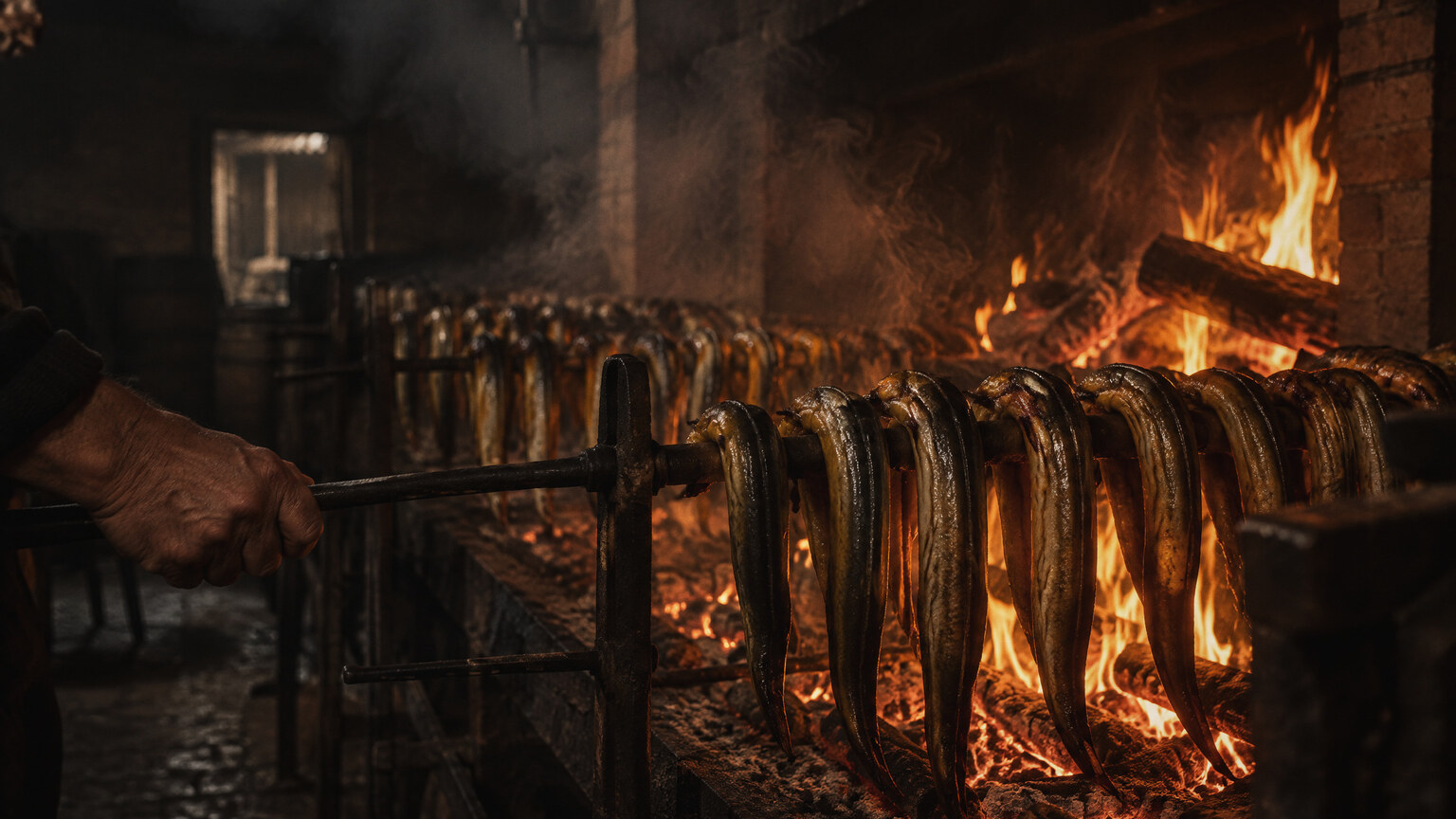
    October is the right month. In the lagoons the fishing season opens, running from October to December, with the lavorieri, the traditional fishing weirs. And at the Manifattura dei Marinati there's the Sala dei Fuochi, the Hall of Fires, with its twelve great fireplaces: eels on spits, the embers, the smoke rising and filling the room. With a name like ours, it's hard to remain unmoved.

    A Sunday among the canals of Comacchio, then an evening at the table, talking about it. The sea and the lagoons are our home ground, and in autumn you feel them more than ever.

    The colour of pumpkin

    We're a fish trattoria, but October in Ferrara has only one colour: pumpkin orange. It's the season of cappellacci di zucca ferraresi, the local pumpkin-filled pasta, PGI since 2016 (IGP in Italian): egg pasta with a filling of violina pumpkin, cheese, breadcrumbs and a hint of nutmeg. And no amaretti, unlike the tortelli from Mantua. Around here, we're particular about that.

    You'll find them all over the city, and rightly so: they're worth tasting where they've always been made. To find out more about the traditional dishes, we wrote here about what to eat in Ferrara.

    To close the month: the Ferrara Food Festival

    At the very end, from Friday 30 October to Sunday 1 November 2026, the historic centre hosts the fifth edition of the Ferrara Food Festival: cooking demonstrations, tastings and local specialities, from salama da sugo, Ferrara's slow-cooked pork salami, to pampapato, the spiced chocolate cake. A nice way to say goodbye to October and open the way to winter.

    On the plate and in the glass

    In the kitchen, autumn has really arrived. Paolo follows what the sea brings and what the lagoons bring, and the off-menu specials are described in person, table by table.

    In the glass, there are two local answers. With eel, the Fortana frizzante from Bosco Eliceo: bubbles and acidity to cut through the richness. With pumpkin, the Fortana ferma, the still version, which holds up well to the sweetness of the filling. Two bottles, one season.

    Frequently asked questions

    When is Internazionale a Ferrara in 2026?
    From 2 to 4 October 2026, in the centre of Ferrara, with talks, screenings, exhibitions and workshops.

    When is the Ferrara Food Festival 2026?
    From Friday 30 October to Sunday 1 November 2026, in the historic centre. It's the fifth edition.

    Do cappellacci di zucca ferraresi contain amaretti?
    No. Cappellacci di zucca ferraresi PGI contain no amaretti: that's the main difference from the tortelli di zucca of Mantua.

    If you're passing by

    October is a full month, best enjoyed slowly. If you're in town for the festival, for the sagra or just for the first fog, the table is ready. Something warm, a local bottle, and the evening drawing in early.

    We look forward to seeing you. And if you already know us, you know the best thing is when you come back.
  • From Monet to Van Gogh to Kandinsky: the exhibition at Palazzo dei Diamanti (and dinner afterwards)

    From Monet to Van Gogh to Kandinsky: the exhibition at Palazzo dei Diamanti (and dinner afterwards)

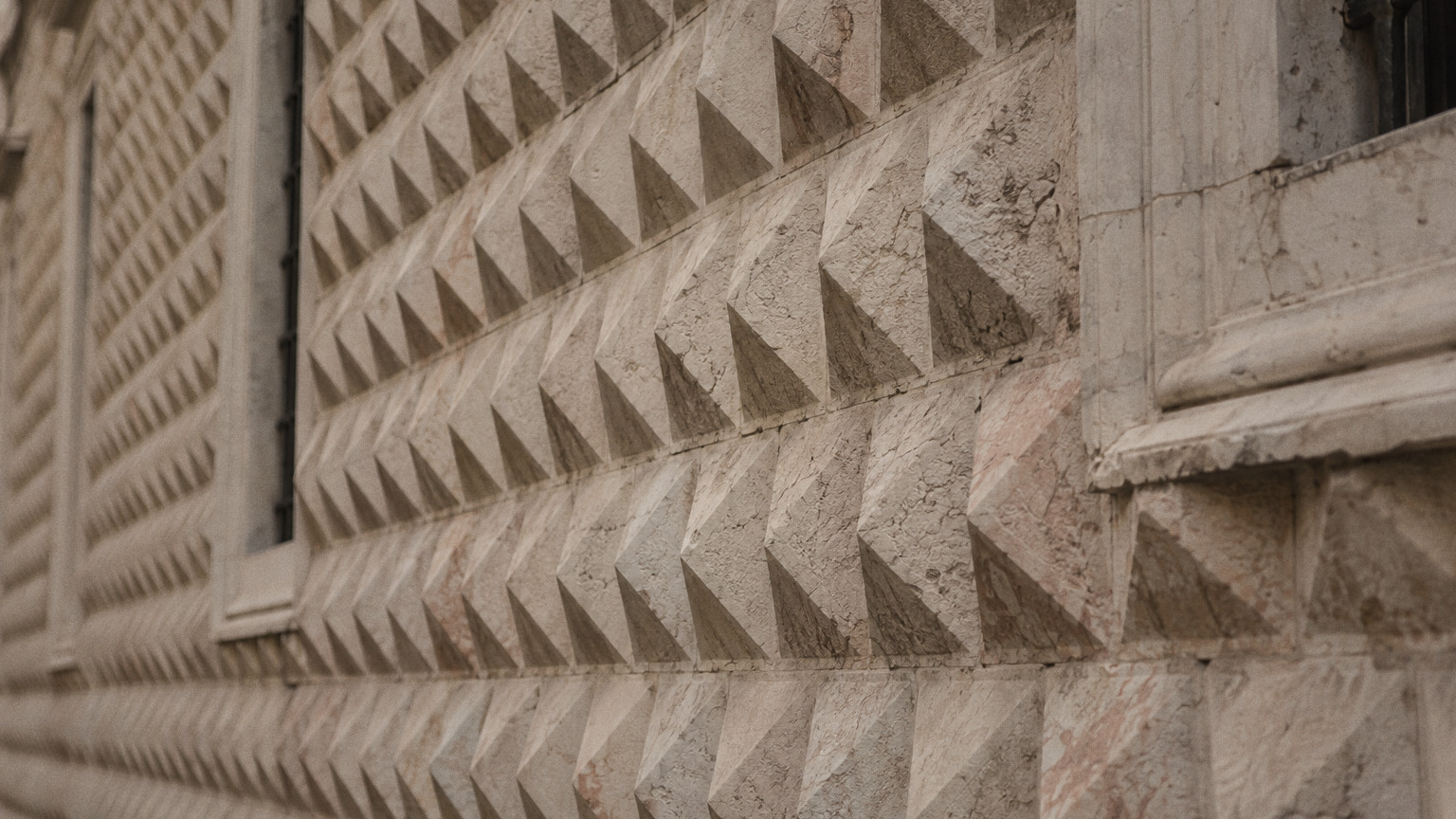
    A façade of marble cut to diamond points. The afternoon light sliding across them and turning them pink. And inside, this autumn, Monet, Van Gogh and Kandinsky.

    Since 19 September the exhibition at Palazzo dei Diamanti has been the kind that makes people come to Ferrara on purpose: "Da Monet a Van Gogh a Kandinsky. Nuovi sguardi sulla natura e la modernità" (From Monet to Van Gogh to Kandinsky: New Perspectives on Nature and Modernity), open until 10 January 2027. We like the idea of half of modern European painting spending a few months in our city. Here's what to see, how to plan your visit, and how to round off the day.

    What to see

    There are 120 works: paintings, drawings and prints. Most of them come from the Museum Boijmans Van Beuningen in Rotterdam, alongside a selection from major Italian collections, public and private.

    A simple question runs through the exhibition: how do you go, in less than eighty years, from painting a field from life to dissolving it into shapes and colours? The route is divided into nine chapters and follows exactly that path:

    1. The Barbizon School, landscape observed from life.
    2. The Macchiaioli, the Italian answer, all light and colour.
    3. Impressionism, the perception of a single moment.
    4. The Hague School, the Dutch version: more sober, more atmospheric.
    5. The Post-Impressionists, when colour and form become independent.
    6. Divisionism, light that vibrates.
    7. City life, increasingly centre stage.
    8. Futurism, and then the return to order.
    9. Abstraction, where the visible world melts away.

    The names make your head spin: Courbet, Monet, Berthe Morisot, Pissarro, Renoir, Sisley, Degas, Gauguin, Van Gogh, Signac, Redon, Picasso, Bonnard, Vuillard, Kandinsky, Mondrian. And the Italians: Fattori, Signorini, Pellizza da Volpedo, Segantini, Previati, Boccioni, Sironi.

    A Ferrara native in the galleries: Boldini

    Among the Italians there is also Giovanni Boldini, born right here in Ferrara. The exhibition includes works from the city's Museo Giovanni Boldini, such as his Autoritratto a sessantanove anni (Self-Portrait at Sixty-Nine) from 1911. Seeing him alongside the greats of Paris, on home ground, feels special. That is how we like it: the world passing through, and Ferrara ready for it.

    The building itself, before the exhibition

    It is worth looking up before you go in. Palazzo dei Diamanti owes its name to its rusticated façade: around 8,500 blocks of white marble veined with pink, cut to a diamond point. It was designed by Biagio Rossetti, and building began in 1493, commissioned by Sigismondo d'Este.

    It stands on Corso Ercole I d'Este, the backbone of the Addizione Erculea, the part of the city Rossetti laid out for Ercole I and the reason Ferrara is called the city that invented the modern urban plan. The building faces the Quadrivio degli Angeli: stop at the crossroads for a minute and watch how the façade changes with the light. The Pinacoteca Nazionale, the national picture gallery, is housed here too.

    Planning your visit

    • Dates: from 19 September 2026 to 10 January 2027.
    • Opening hours: every day from 9.30 to 19.30. The ticket office closes at 18.30.
    • Tickets: full price 16 euros, audio guide included (on your smartphone too). Palazzo dei Diamanti's own advice, which we are happy to pass on: buy online in advance. Choose a time slot and walk straight in without stopping at the ticket office.
    • Where: Corso Ercole I d'Este 21. For information, call +39 0532 244949.

    A tip from those of us who live in the city all year round: on autumn weekends Ferrara fills up. In early October there is also Internazionale (2 to 4 October): if you are coming on those days, booking ahead is all but essential.

    The perfect day, in our opinion

    The exhibition in the morning, when the rooms are quieter. Then a slow walk along Corso Ercole I d'Este, as far as the city walls if your legs are up to it. The afternoon in the centre, between the Castello and the medieval streets, with the light fading early.

    And in the evening, dinner. After a day spent in front of Monet and Segantini, we find ourselves wanting simple, real things: fish from the Adriatic, the lagoons, a bottle from winemakers we know. You talk about paintings, you order whatever Paolo picked up today, and it feels good to be there.

    If you would like a fuller itinerary, we wrote about it here: Ferrara in one day, on foot and by bike.

    Frequently asked questions

    How long does the exhibition at Palazzo dei Diamanti run?
    "Da Monet a Van Gogh a Kandinsky" runs until 10 January 2027. It opened on 19 September 2026.

    What are the exhibition's opening hours?
    Every day from 9.30 to 19.30. The ticket office closes at 18.30.

    Which artists are in the exhibition?
    Among others Monet, Van Gogh, Kandinsky, Mondrian, Degas, Renoir, Gauguin and Picasso, with the Italians Fattori, Segantini, Boldini and Boccioni. 120 works in total, most of them from the Museum Boijmans Van Beuningen in Rotterdam.

    Is it worth buying tickets online?
    Yes. Booking online, you choose a time slot and go in without stopping at the ticket office. At weekends it makes all the difference.

    If you're passing by

    An exhibition like this is a good excuse to come to Ferrara, or to come back. If after the paintings you fancy an unhurried dinner, the table is ready.

    We look forward to seeing you.

  • The wines of the sands: the Bosco Eliceo and the winemakers we like

    The wines of the sands: the Bosco Eliceo and the winemakers we like

    Low vines, planted in sand, a few metres from the Adriatic. The ground crunches under your shoes like a beach. And yet a wine is born there, and it has just the right salinity for our fish.

    These are the wines of the sands: the Bosco Eliceo. A name that few people even in Ferrara know, and one we've been happy to pour ever since we opened. Because it comes from here, from our own patch of liquid world, sand, lagoons, sea, salt, and because we like the people who make it. This is our little guide, told from behind the counter.

    Why they're called “wines of the sands”

    The appellation is called Bosco Eliceo DOC and has been recognised since 1989. The nickname, “Vini delle Sabbie”, wines of the sands, isn't label poetry: it's the truth of the soil. The vines grow on ground that is up to 95-97% sand, the legacy of sediment laid down by the Po and the Reno and of the old land reclamations, between the province of Ferrara, the Po Delta and the coast.

    The name “Bosco Eliceo”, on the other hand, comes from the woods of holm oak, the “elci”, that once grew on the sand dunes along the sea.

    There's a detail we like to tell at the table. Many of these vines are “franche di piede”, ungrafted: sand makes the soil naturally hostile to phylloxera, the insect that wiped out half of Europe's vineyards in the nineteenth century. Here the low vines survived. Drinking a Bosco Eliceo, sometimes, means drinking from old plants that held on where elsewhere everything had to start again from scratch.

    Fortana, the “Uva d'Oro”

    The house grape is Fortana, which around here they call “Uva d'Oro”, the golden grape. It has been grown for centuries. The Consorzio traces the earliest evidence all the way back to the Etruscans of Spina, a local tradition, told that way by the people who protect the appellation, rather than a certain record.

    And here comes the lovely story, the one we love to tell while warning straight away that it's a legend, not a documented fact. Fortana is said to have come from the Côte d'Or, the “golden slope” of Burgundy, brought to Ferrara by Renée of France on her marriage to Ercole II d'Este: French vine cuttings that found a home in the sandy, brackish soils of the Delta. From there, they say, “Côte d'Or” became “Uva d'Oro”. It's a tradition, and we hold it dear for exactly what it is: a story that smells of the Este court, to be told at the end of dinner without passing it off as truth.

    Under the DOC there are four types: as well as Fortana, Merlot, Sauvignon and Bianco del Bosco. Four different ways of standing on sand.

    What a wine grown by the sea tastes like

    If you've never tasted them, fix one word in your mind: salinity. The wines of the sands have modest alcohol, around 10.5-11%, lovely acidity and a slightly salty note, a gift of the nearby sea. They're light, straightforward, often lightly sparkling. Fresh, fruity aromas, floral at times.

    No “important” wine that silences the dish, in other words. Wines that do their job: they make you thirsty, they clean your palate, they make you want the next mouthful. Trattoria wines, in the best sense of the word.

    Why a fish trattoria pours Bosco Eliceo

    A fair question: a red, or a “farmhouse” fizz, with fish? Yes. And this is exactly where the sand comes in useful.

    The logic is simple, the sommeliers' logic as told in a kitchen: acidity and bubbles cut through fat and bring balance. It works beautifully with the richer dishes of our lagoon world. Sparkling Fortana is the pairing of choice with eel, eel risotto for instance, where acidity and bubbles cut through the richness. And when the dish turns sharp, like certain brodetti from the Comacchio area made with vinegar, still Fortana holds up better than many whites.

    Then there are the whites. Bianco del Bosco frizzante, again, with eel risotto. Bosco Eliceo Sauvignon, dry and a touch tart, with marinated eel. And as an aperitivo, before sitting down, they all work.

    The thread is always the same: the salinity of the wine talking to the salinity of the lagoon fish. Same environment, same language. That's why on our list, alongside the winemakers we travel around to find, we keep a place for those who make wine just behind us.

    The new one to try: Fortana Rosé

    Among the new things there's the sparkling version of Fortana, the Fortana Rosé. It was born as an aperitivo, and it's perfect that way, a cold glass as you arrive, but it holds its own at the table too, with fish and white meats.

    If you come by in summer, with the long light and the heat that won't let go, it's the first thing we'll put in your hand. Bubbles, colour, freshness. Few pretensions and a great desire to carry on.

    Frequently asked questions

    What is the wine of the sands?
    It's the name given to Bosco Eliceo DOC, a wine produced between Ferrara, the Po Delta and the coast on soils made almost entirely of sand, up to 95-97%. Hence the nickname.

    What wine do you drink in Ferrara?
    The most local wine, out towards the sea, is Bosco Eliceo: Fortana, Merlot, Sauvignon and Bianco del Bosco. Savoury, light wines, often lightly sparkling, made to be drunk at the table, and in our view with fish.

    What is Fortana?
    It's the leading grape of the Bosco Eliceo, also known as “Uva d'Oro”. It gives a fresh, savoury wine, often lightly sparkling, and today it also comes as a sparkling rosé.

    If you're passing

    Bosco Eliceo isn't a wine that changes your life at the first sip. It's better than that: it's a wine that tells you where you are. The sand, the sea a stone's throw away, the lagoons at your back.

    We keep it there, alongside the other artisan winemakers we like, and we're happy to open it for anyone who wants to understand where it comes from. If you fancy trying it, with a fritto or in front of a plate of eel, the table is ready. And if you'd rather start on your own, out along the Lidi: do it. That too, in the end, is what we call nuvolare: drifting along like a cloud.

  • What we like this month: September in Ferrara

    What we like this month: September in Ferrara

    The evenings draw in, just a little. The light gets lower, more golden. And Ferrara, after the summer, fills up again.

    September is our favourite month for starting over. The city comes back to life by day, bicycles take back the streets, and in the countryside it's harvest time. The September events in Ferrara follow the same rhythm: a market that brings Europe to the avenue, the grape harvest scenting the evenings, and at the end of the month the lagoons waking up with the eel. Here is what we like.

    Europe on the avenue: the Mercato Europeo

    From 18 to 20 September 2026 the Mercato Europeo, L'EuropAFerrara, returns to viale Alfonso I d'Este. Over a hundred exhibitors, stalls from half of Europe, free entry.

    It's one of those things that puts us in a good mood: you stroll under the trees along the avenue, taste a cheese you didn't know, go home with something odd in your bag. You don't need a plan. Just a free afternoon and a bit of curiosity.

    Harvest time

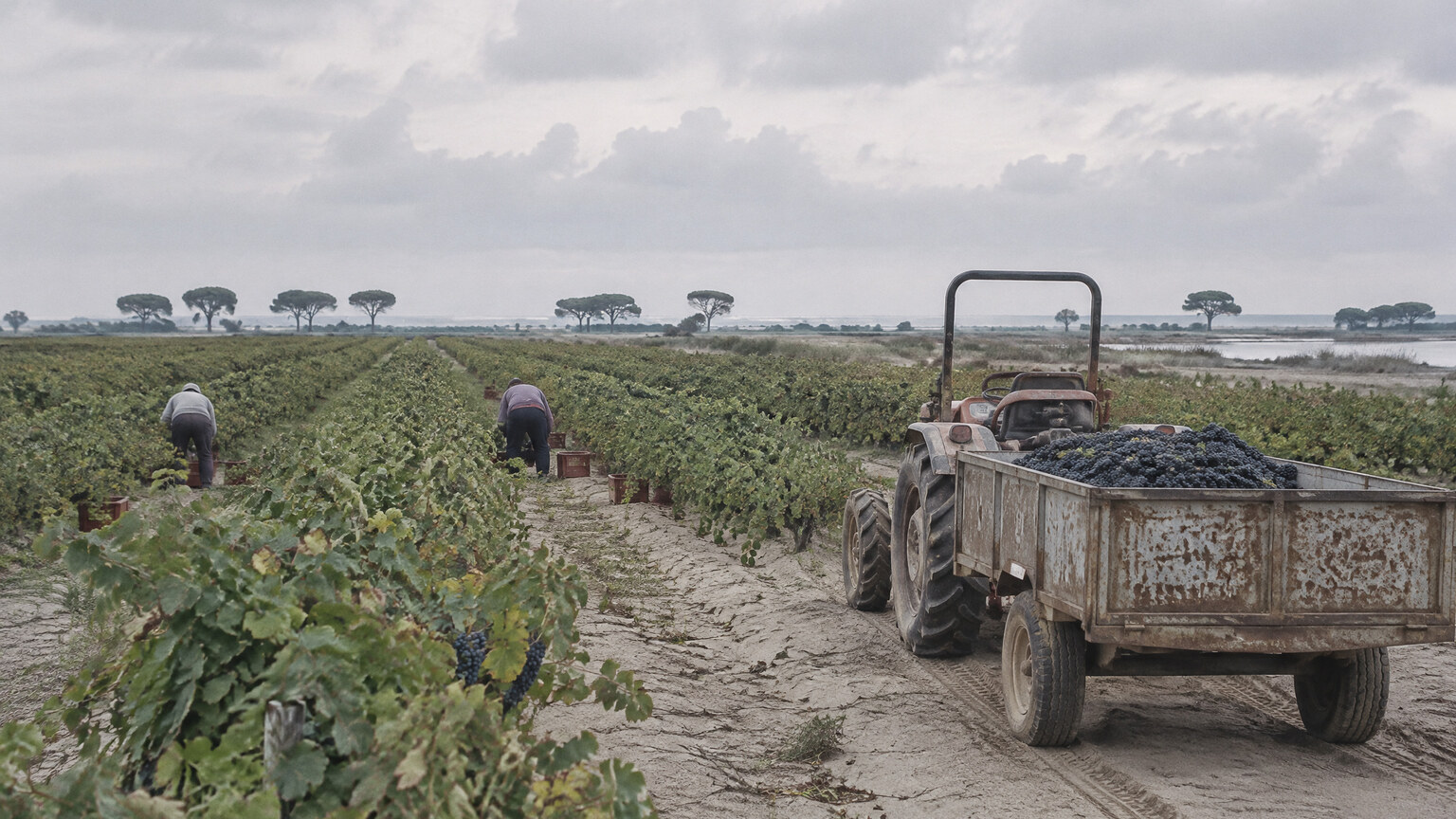
    September, around here, is the month of the harvest. On the sands of Bosco Eliceo too, the DOC of the Ferrara coast, where the vines grow on soil that's almost pure sand, a stone's throw from the sea.

    We love the harvest for what it promises. It's the hands of the winemakers we know, the crates full, the good tiredness at the end of the day. It's the part of wine you don't see in the glass, and it's the part we care about most. If you'd like to know more, we wrote here about the wines of the sands and the winemakers we like.

    The lagoons wake up: the Sagra dell'Anguilla

    On 26 September the season that suits us best begins. In Comacchio the Sagra dell'Anguilla, the eel festival, returns over three weekends: 26 and 27 September, 3 and 4 October, 10 and 11 October 2026.

    The eel is the queen of the lagoons. It's born a very long way away, in the Sargasso Sea, and spends years in the waters of Comacchio before being caught with the lavorieri, the ancient fishing weirs of the lagoons. The fishing season runs from October to December: the festival, in effect, is an early greeting. The anguilla marinata tradizionale delle Valli di Comacchio, the traditional marinated eel, is a Presidio Slow Food, and it alone is worth the trip.

    Our advice: a Sunday in Comacchio, on foot along the canals, and then dinner in the evening. The sea and the lagoons are our liquid landscape, and September is when they make themselves felt most.

    On the plate and in the glass

    In the kitchen it's a change of season. Summer still leaves something behind, autumn is knocking. Paolo follows what comes in, day by day, and often the best dishes are the off-menu specials, described at the table.

    In the glass, with eel, there's a ready local answer: the Fortana frizzante from Bosco Eliceo. Acidity and bubbles cut through the richness, the savouriness of the wine calls to that of the lagoon. A house pairing, and still our favourite.

    Frequently asked questions

    When is the Mercato Europeo in Ferrara in 2026?
    On 18, 19 and 20 September 2026, on viale Alfonso I d'Este. Entry is free.

    When is the Sagra dell'Anguilla in Comacchio in 2026?
    Over three weekends: 26 and 27 September, 3 and 4 October, 10 and 11 October 2026, in the centre of Comacchio.

    Which wine goes with eel?
    We like the Fortana frizzante from Bosco Eliceo: the bubbles and acidity balance the richness of the eel.

    If you're passing by

    September is the month when the city comes home, and we come home with it. If you're passing by for the market, for the sagra, or just for a cooler evening, the table is ready. We talk about what came in today, open a local bottle, and it feels good to be there.

    We look forward to seeing you. No hurry.

  • What to eat in Ferrara: the dishes that tell the city’s story (and where the sea ends)

    What to eat in Ferrara: the dishes that tell the city’s story (and where the sea ends)

    If you're wondering what to eat in Ferrara, know this: it's a city with two cuisines in one. On one side the Este court, the splendour of the Renaissance banquet, the pumpkin and pork of the hinterland. On the other, the water: the lagoons, the Po Delta, eel and oily fish. We at Le Nuvole are on the side of the water, we're a fish trattoria, but in Ferrara land and water have always gone hand in hand, and you can't understand one without the other.

    So, what to eat in Ferrara? Here is our stroll: eight dishes that tell the city's story, from the dukes' table down to where the sea ends. For each one: where it comes from, what it is, and how we like it.

    From the Este court

    Ferrara's cuisine was born in the Renaissance, when at the Este court the banquet was an art form. The “scalco”, the man who organised the banquet, counted for more than the cook. Two names come up in any honest account of this cooking: Cristoforo da Messisbugo, whose recipe book came out in 1549, and Giovan Battista Rossetti, with his Dello Scalco of 1584. Almost all the dishes that follow start there.

    1. Cappellacci di zucca ferraresi

    The origin. Pumpkin-filled pasta, PGI since 2016 (IGP in Italian), and Ferrara's egg pasta was already documented by Messisbugo in 1549. Pumpkin has been grown in these fields since 1570.

    What they are. Fresh egg pasta filled with oven-baked yellow “violina” pumpkin, cheese, breadcrumbs and a pinch of nutmeg. The shape recalls the farmer's straw hat, caplaz in dialect. Something we always say: Ferrara's cappellacci do not contain amaretti biscuits, they are not the tortelli of Mantua.

    How we like them. The classic: melted butter and sage, which lets the pumpkin do the talking. And in the glass, a mature, savoury white from the coast, a Bosco Eliceo: the salinity of the sea against a dish of the land. There, in the very first dish, land and water already talking to each other.

    2. Salama da sugo

    The origin. A PGI cured pork sausage with Renaissance roots: the first mention dates from 1492, and there's a letter from Lorenzo de' Medici to Duke Ercole I d'Este thanking him for the “precious and most welcome” gift.

    What it is. Pork with red wine and spices (nutmeg, cinnamon, cloves), stuffed into a pig's bladder, tied “like a melon” and aged for up to a year. It's steamed, suspended over boiling water, for around five hours. Pure patience.

    How we like it. Hot, sliced, with mashed potato. Alongside, a sparkling Fortana from the Bosco Eliceo: acidity and bubbles cut through the fat and bring balance. It's the most “courtly” dish on the list: substantial, rich, for a special occasion.

    3. Pasticcio di maccheroni alla ferrarese

    The origin. Careful here: it is not PGI. It's the subject of a De.Co. project, a Denominazione Comunale d'Origine, the City of Ferrara's own municipal designation of origin. It descends from the meat “pastelli” of the Middle Ages and the Renaissance, and the macaroni arrived from the South with the marriage in 1473 between Ercole d'Este and Eleonora d'Aragona, daughter of the King of Naples.

    What it is. A shell of sweet shortcrust pastry filled with macaroni, ragù, béchamel and truffle, dome-shaped and baked in the oven. The beauty is in the contrast: sweet outside, savoury inside. Traditionally it's a Carnival dish.

    How we like it. As a small baroque marvel to be cut open at the table. If you're thinking of the “timballo” in The Leopard, you're not far off: the same idea of pasta hidden under a crust.

    4. Coppia ferrarese

    The origin. The city's PGI bread. Messisbugo mentions it in 1547 as “pane intorto”, twisted bread, in the household accounts for the table of Prince Alfonso II. That twisted bread is today's Coppia.

    What it is. Two twisted arms forming a “fan of four horns”; the tips are called crostini. A crust as dry and crunchy as a breadstick, a soft heart. (There's also a legend linking it to Lucrezia Borgia's curls: charming, but it's legend, not history.)

    How we like it. As trattoria bread, plain and simple. Those crunchy crostini are made to be snapped off and used to mop up a sauce, or to keep a glass company while you wait for the first course.

    And then the sea ends

    Here we head down towards the water, and this is home. The Valli di Comacchio lie in the Po Delta Park, between the Po, the Reno and the Adriatic: reed beds, brackish lagoons, the only delta in Italy, a UNESCO World Heritage Site together with Ferrara. People have always fished and farmed there: eel, sea bass, lagoon shrimp.

    5. Anguilla marinata di Comacchio

    The origin. This one too is not PGI: it's a Presidio Slow Food, a Slow Food Presidium. The marinating method was codified as far back as the Regulations of 1818, and it's still made at the Manifattura dei Marinati in Comacchio, in the “Sala dei Fuochi”, the Hall of Fires, with its twelve great hearths.

    What it is. Wild lagoon eel, spit-roasted and put in brine: for every litre of white wine vinegar, around 70 grams of Cervia salt, a glass of water, a bay leaf. The eel is born in the Sargasso Sea and comes back here to close the circle; it's caught with the lavorieri, the traditional fishing weirs, from October to December. They say that in Comacchio there are forty-eight recipes for eel.

    How we like it. It's the flagship dish of the lagoons, the one closest to us in spirit. Vinegar, salt, woodsmoke: austere and beautiful. Against the vinegar of the marinade we happily go for a Bosco Eliceo Sauvignon, dry and slightly tart, which balances the richness of the eel.

    6. Brodetto di valle

    The origin. The Adriatic fish soup was born on board the fishing boats, as a way of using up the less prized catch. On the Ferrara side the reference point is the lagoon version: Comacchio's eel brodetto “a becco d'asino”.

    What it is. Eel with onion, vinegar and tomato conserve; in winter there's also a version with savoy cabbage. Poor man's cooking, of leftovers and patience.

    How we like it. Deep, slow, made for mopping up with bread. It's the dish that best tells the story of life in the lagoons: nothing precious in the ingredients, everything in the time and the hand. Here, with the sharp dishes of the Comacchio area, a still Fortana from the Bosco Eliceo holds up better than the whites. (And a brodetto di valle is not a “DOP Ferrara dish”; none of them is: it's tradition, and that's perfectly fine.)

    7. Pesce azzurro: sardoncini and alici

    The origin. Sardines and anchovies from the Adriatic, the pesce azzurro, the oily fish, of the Ferrara and Romagna coast. At the Lidi di Comacchio they're fried and then marinated with vinegar and bay leaf, the same “old-style” logic as the eel.

    What it is. Humble fish, plentiful, sustainable. Fried and marinated, or scottadito, straight off the grill.

    How we like it. A lot. It's the heart of an honest seaside trattoria: no trophies, just freshness. Warm sardoncini, a rustic farmhouse fizz from the Bosco Eliceo, and you feel good, with no hurry.

    8. Pampapato di Ferrara

    The origin. The city's PGI cake, since 2015. It was born in the sixteenth century in the enclosed convent of Corpus Domini: the nuns prepared a spiced bread for the high prelates at Christmas. The shape recalls a cardinal's cap, the “pope's bread”. The chocolate coating, on the other hand, is a recent idea: a Ferrara pastry chef, in 1902.

    What it is. A dome of almonds, candied fruit, cocoa, nutmeg and cinnamon, covered in dark chocolate. One of the rare cakes with no added fat.

    How we like it. At the end of the meal, in small pieces, unhurriedly. It closes the circle: we started with the Este banquet, and we finish with a sweet born next door to their court.

    (A note, because it matters to the people who cook: torta tenerina, Ferrara's other great cake, is not PGI; it's a Prodotto Agroalimentare Tradizionale, a PAT, a traditional agri-food product. Delicious all the same.)

    Frequently asked questions

    What is the typical dish of Ferrara?
    There isn't just one: the city lives on a pair. If we have to choose the symbol of the land's table, it's cappellacci di zucca; for the water's, Comacchio eel. Together they tell Ferrara's story better than any single dish.

    Are cappellacci di zucca PGI?
    Yes, they have been PGI since 2016. But be careful not to call everything else PGI: pasticcio di maccheroni is a municipal De.Co. project, the tenerina is a PAT, Comacchio eel is a Presidio Slow Food. They're different recognitions, and mixing them up is the most common mistake.

    Where do you eat fish in Ferrara?
    The thread to follow is that of the lagoons: eel, brodetto di valle, oily fish from the Adriatic, and the small Goro oysters from our Delta. Look for places that think in terms of season and place rather than big names. And yes, at our place too: that's exactly what we try to bring to the table.

    If you're passing this way

    Eight dishes aren't the whole of Ferrara; this is a stroll, not a census. But if you line them up, from the Este court down to where the water turns brackish, you've understood what this city is made of: double, between splendour and lagoon, between pumpkin and eel.

    We're on the side of the sea and the lagoons, with the wines of the sands in the cellar. If you fancy trying this side of Ferrara, the table is ready. And if you end up in Comacchio in front of a plate of eel that isn't ours, that's perfectly fine too: it's the same story, and it's a good one.

  • What we like this month: August in Ferrara

    What we like this month: August in Ferrara

    An August evening, the shutters half closed, the air finally moving. The city is slower, and that's fine by us.

    August in Ferrara comes in two movements. The first weeks are quiet: the centre empties, those who stay walk without hurry, and we breathe a little more easily too. Then, towards the end, the city changes rhythm all at once. It's the month when the August events in Ferrara all light up together, and the streets fill with music. Here is what we like this month.

    The city lights up: the Buskers Festival

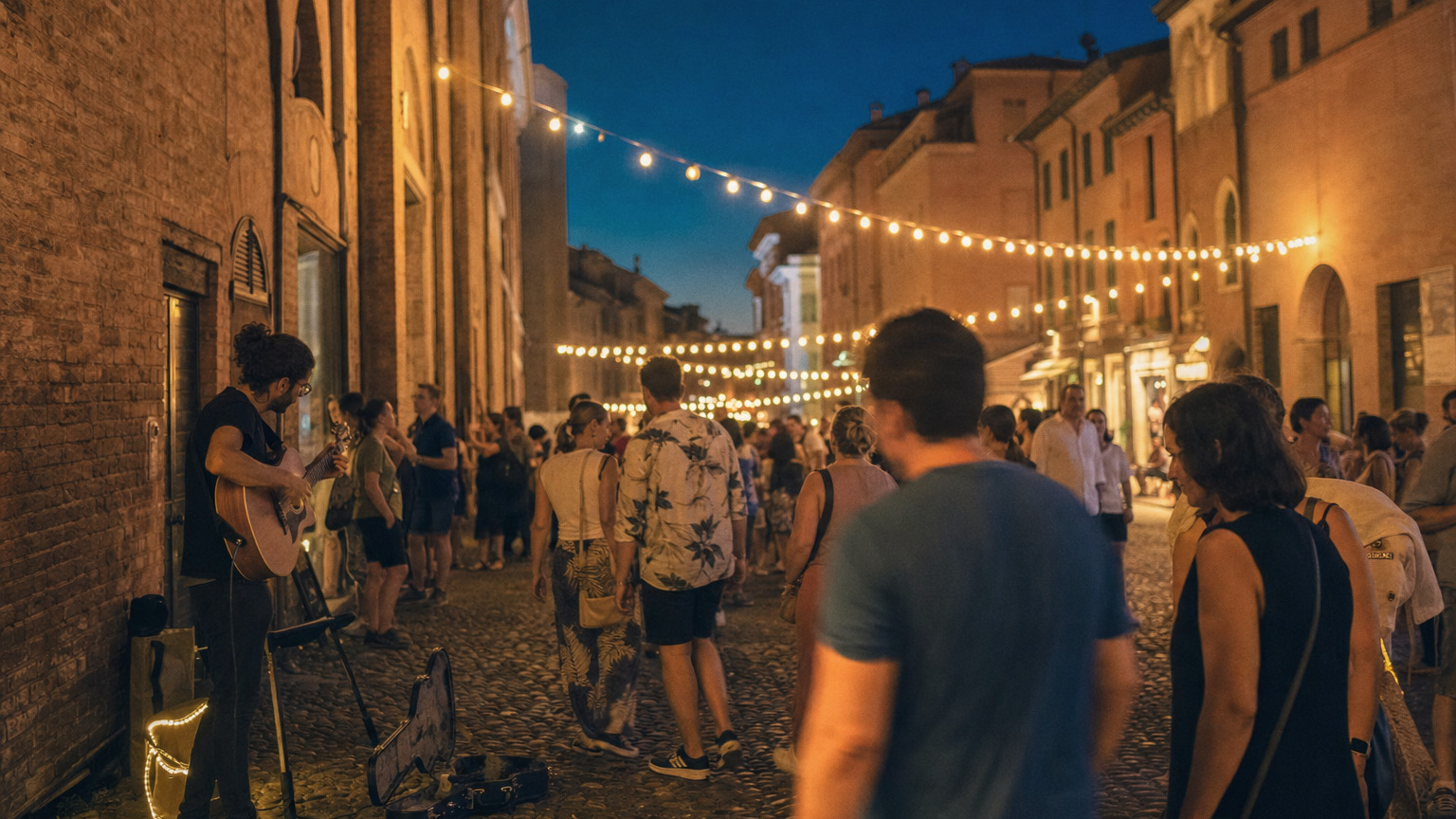
    The main event comes at the end of the month. The Ferrara Buskers Festival returns from 26 to 30 August 2026 in the historic centre: music and street art taking over the streets and squares, with the traditional preview in Comacchio in the days before.

    It's one of those moments when Ferrara is at its best. You wander with no destination, turn a corner, and there's a new sound: a violin, a choir, something you weren't expecting. The best things, often, weren't planned.

    A practical tip from those of us who are in the dining room every evening: on festival nights the centre fills up. If you want an unhurried dinner between one show and the next, it's worth planning a little ahead. Then back out, into the music.

    The call of the sea and the Lidi

    August, around here, is also something else: the longing for the sea. The Lidi ferraresi, the beaches of the Ferrara coast, are just a step away, and this is the right time to go. A day on the beach, the sound of the water, and the evening settling in slowly.

    There's a summer spirit we love: a summer night, soft lights, cool wine, a table to share. We won't give you programmes or dates for evenings by the sea; those change, and we'd rather not promise what we can't guarantee.

    What we can tell you is what the Lidi bring to the plate. The pesce azzurro dell'Adriatico, the oily fish of the Adriatic, sardoncini and anchovies, is humble cooking and local identity at once: fried and then marinated with vinegar and bay leaves, the old way, or "scottadito", straight off the grill. It's the taste of summer on the Ferrara coast, and it's exactly what we like putting on the table right now.

    What's good right now, on the plate

    The season is in charge. In summer, pesce azzurro is at home here: small, full of flavour, honest. We treat it with very little, a bit of heat, a touch of acidity, a herb, because it's already good as it is.

    It's the ingredient that makes the dish. Sea and lagoons, our liquid landscape of sand, water and salt. Everything starts there, and we like to tell you about it in person, table by table.

    And in the glass: a cool one from close to home

    In the heat, we want a wine that's cool and with a bit of life in it. Luckily, we have one on our doorstep.

    They are the wines of the sands of Bosco Eliceo, the DOC of the Ferrara coast, where the soil is almost pure sand. Wines with low alcohol, good acidity and a faintly saline note that comes from the sea nearby. Fortana, the leading grape, in its frizzante version (lightly sparkling) is one of those bottles we often reach for in summer: bubbles, freshness, no pretensions. It goes beautifully with fish.

    Then there are the artisan winemakers we love, the bottle-refermented wines, alive and saline, to uncork without ceremony over a plate of fried fish. That's our idea of a wine cellar: small, always moving, from here.

    Frequently asked questions

    When is the Buskers Festival in Ferrara in 2026?
    The Ferrara Buskers Festival takes place from 26 to 30 August 2026 in the historic centre, with the traditional preview in Comacchio in the days before.

    Is it worth visiting Ferrara in the first weeks of August?
    Yes, if you're after a slower city. The first weeks are quiet: you can wander at your own pace, and the Lidi ferraresi are a short hop away for a day at the seaside.

    Which local wine goes with summer fish?
    We like the wines of the sands of Bosco Eliceo: fresh, faintly saline, and the Fortana frizzante, which really does go well with fish.

    If you're passing by

    August is our slow month that suddenly fills with music. If you're in town, for the festival, for the sea, or just for an unhurried evening, the table is ready. We talk about today's fish, choose a cool bottle, and it feels good to be there.

    We look forward to seeing you. And if you already know us, you know the best thing is when you come back.
  • Ferrara with kids: a day of walls, castle and clouds

    Ferrara with kids: a day of walls, castle and clouds

    A child, in the car, asking where we're going. And us saying: to look at the clouds. It nearly always works. Because Ferrara, seen from the height of a seven-year-old, is a city made to measure: flat, slow, with red walls that look like a castle you'd draw and plenty of sky above. Down here, after all, there's us too.

    If you're wondering what to do in Ferrara with kids without turning the day into a forced march from museum to museum, we'll tell you how we'd live it. One thing at a time, with the right breaks. No rush: it's our trade, after all.

    Start on a bike, on the walls

    Ferrara is the city of bicycles, and not just as a figure of speech. Around 90% of people in Ferrara own at least one, and a quarter of all home-school-work journeys are made by pedal, on more than 200 km of cycle paths. Translated for anyone arriving with children: here the bike is the rule, not the exception. The cars expect it.

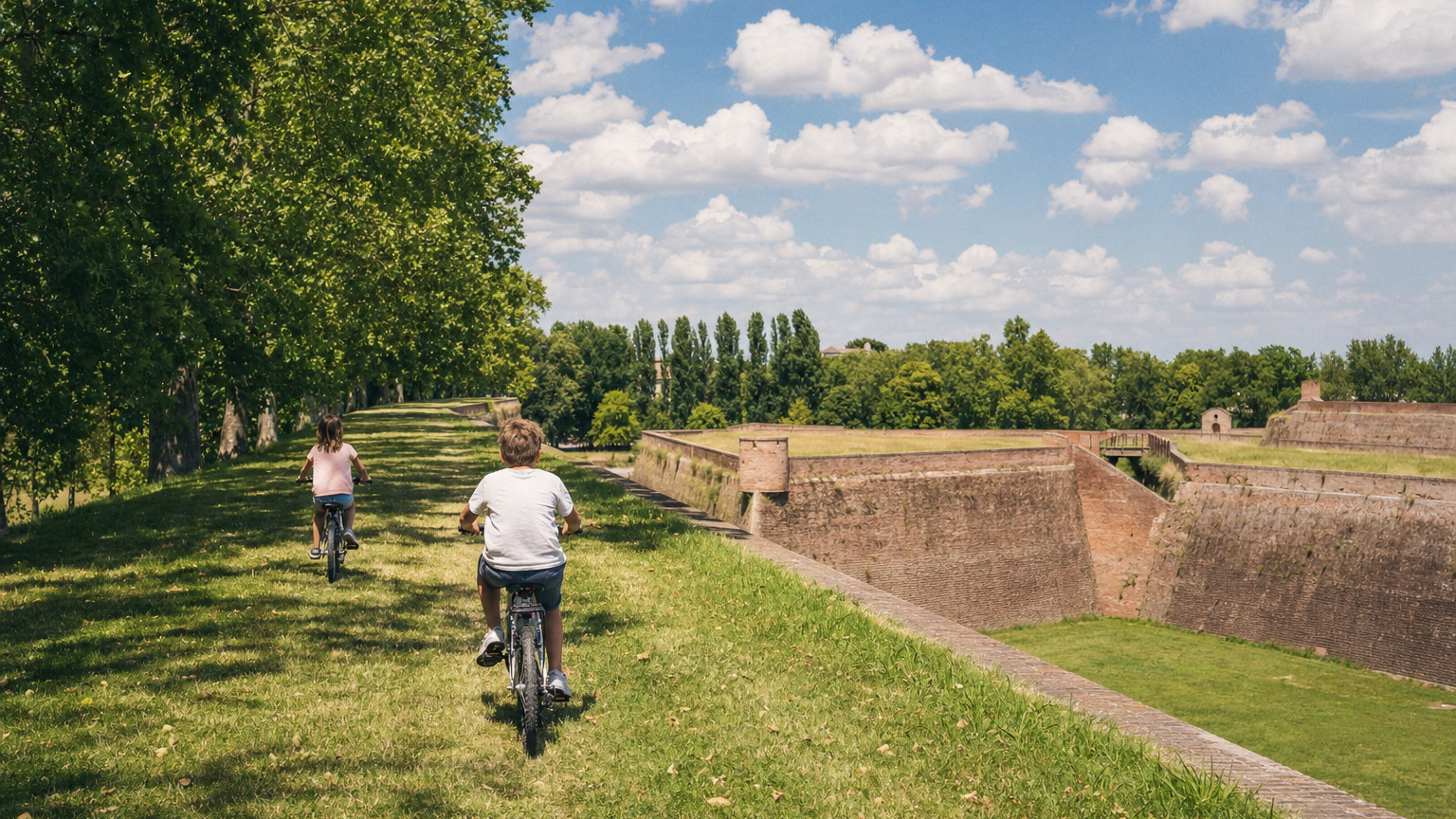
    The loveliest way to begin is to go up onto the walls: a ring of around 9 kilometres that wraps the historic centre, walkable and cyclable among bastions, towers and gates. No need to do the whole thing. One stretch is more than enough. You pedal above the city, in the shade of the trees, and the children race ahead without a thought for traffic. Grass, wheels, a bit out of breath and the odd soft tumble: that's the first real stop.

    From Corso Ercole I d'Este you reach the Porta degli Angeli, a good spot to get on or off. And if one of the little ones looks up and stops to watch the sky changing, well, we understand that perfectly.

    The Castle, with its moat and towers

    Then there's the big one, the Castello Estense. The symbol of the city: four towers, red terracotta brick, white balustrades, drawbridges. And all around, the thing children love most: a moat full of water. A real castle, with water around it, right in the middle of Ferrara. Hard to explain, easy to look at.

    You walk around it, count the towers, look for the ravelins. The Torre dei Leoni can be climbed, for those with the legs and the will. We won't give you opening hours or ticket prices here; they change often, and the last thing we want is to send you to a closed door: a quick check on the official website before you set off and you're sorted.

    Even just from the outside, though, the Castle makes an impression. It's one of those places that stay with children longer than any number of stories.

    Parco Bassani, for running properly

    After the walls and the towers, you need space. Lots of it. You'll find it at the Parco Urbano Giorgio Bassani, the big green area to the north, between the walls and the Po, named after the Ferrara-born writer. It's enormous, we're talking around 1,200 hectares, what they call the Addizione Verde, the Green Addition. Here the children can finally run without anyone saying “careful”.

    It's the place for picnics, for a football, for a blanket on the grass. The one you arrive at full of city and leave full of air. Bring something to eat and let them loose: a park like this, in the end, is the best museum for anyone who's only a few years old. And above, once again, the clouds. It's almost a habit, around here, to start watching them.

    The Delta and the flamingos, if you have a whole day

    If you feel like going further afield, the big prize is the Po Delta. Here the great river meets the Adriatic, and the tourist boards describe it as a destination made for families: boat trips, canoeing, horse riding, birdwatching, nature reserves to explore.

    The thing that leaves everyone open-mouthed, big and small, is the Valli di Comacchio: you go out by boat to look for the flamingos, really pink, standing in the shallow water. For children it's a kind of magic. In summer there are also guided outings to get closer to the birdlife and visit the fishermen's huts, the casoni, along the canals.

    And if it rains, or you need some shade, in Comacchio there's the Museo Delta Antico, designed with younger visitors in mind too: finds from the Etruscan city of Spina, the cargo of a ship wrecked more than two thousand years ago, immersive videos, installations you can smell and displays you can touch. Not the usual look-but-don't-touch museum.

    A day, on a child's scale

    Putting it all in order, a sensible day might look like this:

    1. The walls by bike, one stretch of the ring, with an easy start from the Porta degli Angeli. Above the city, in the shade, no traffic.
    2. Castello Estense, a walk around the moat, counting the towers, a climb up the Torre dei Leoni for the older ones (opening hours on the official website).
    3. Parco Bassani, free running, a football and a picnic on the grass. Time to catch your breath.
    4. The Delta and the Valli di Comacchio, the long outing, by boat, flamingo-hunting. Save it for when you have a whole day to yourselves.

    Four stops, but no obligation. Even just the first three, taken slowly, already make a lovely day. The secret, with children, is to take away, not to add.

    Frequently asked questions

    What is there to do in Ferrara with kids?
    The classic round, stress-free: a stretch of the walls by bike, the Castello Estense with its moat and towers, and a good run around Parco Bassani. With an extra day, the trip to the Po Delta and the flamingos of the Valli di Comacchio by boat. A few things, done calmly.

    Can you get around Ferrara by bike with children?
    Yes, and it's the best way. Ferrara is Italy's city of bicycles: cycle paths everywhere and the ring of the walls, around 9 km, all of it rideable away from cars. One stretch at a time, at the pace of their legs.

    And at the end of the day

    When the children are tired in the right way, the good way, with red cheeks and fewer words than usual, it's time to come back to the table. We're here, a small fish trattoria, with the smell of cooking from the kitchen and no hurry. It's not a place for children or a place for grown-ups: it's a place for families, which is something else.

    If you're passing, the table is ready. And if outside it has started to nuvolare, our word for when the clouds roll in, point it out to them: in Ferrara, watching the clouds is already half the fun.